


Confident Beginner Dressmaking | 4 Week | Make a sweatshirt | Afternoons
Confident Beginner Dressmaking | 4 Week | Make a sweatshirt | Afternoons
Couldn't load pickup availability
Friday 16th October to Friday 6th November 2.30-4.30
Ready to get confident sewing stretch fabrics and learn how to use an overlocker?
Over this friendly four-week course, we’ll work together to make the Closet Core Mile End Sweatshirt, while learning the skills and techniques you need to tackle stretch and knitted fabrics with confidence.
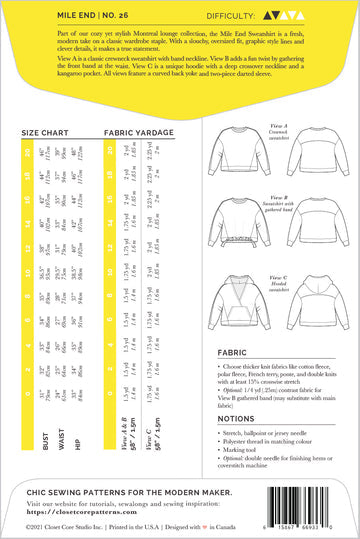
The Mile End is rated by Closet Core as a confident beginner pattern and comes with three very different versions to choose from: an oversized crew-neck sweatshirt, a gathered-waist sweatshirt with ties, or an oversized hoodie with a deep crossover neckline and kangaroo pocket.
It’s a brilliant project for learning more about sewing with knits, and throughout the course you’ll cover techniques including neckbands, cuffs and hem bands, topstitching on stretch fabrics, darts, pockets and ties, depending on the version you choose.
You won’t just leave with a finished sweatshirt — the aim is to help you understand how stretch fabrics behave, how to handle them successfully and how to get the most from an overlocker, giving you skills you can take on to lots of future projects.
Share


Workshop Information
What You'll Learn
By the end of the course, you’ll have experience in:
- Using and threading an overlocker
- Choosing and handling stretch fabrics
- Reading and preparing a commercial sewing pattern
- Sewing stretch seams successfully
- Attaching neckbands, cuffs and hem bands
- Sewing and topstitching knitted fabrics
- Constructing sweatshirt details including sleeves, pockets, hoods and ties
- Achieving a neat, professional finish on stretch garments
A fabulous next step if you’ve been wanting to take the mystery out of overlockers and start confidently sewing your own stretch wardrobe.
Week 1 – Getting to Know Your Overlocker & Sewing Stretch Fabrics
We’ll start by getting comfortable with the overlocker and understanding how it differs from a regular sewing machine.
We’ll look at:
- The main parts of an overlocker and what they do
- Threading the machine
- Understanding the needles, loopers and cutting blade
- Starting and finishing your seams neatly
- Sewing curves, corners and tricky areas
- Choosing the right needle and stitch for stretch fabrics
- Understanding stretch, recovery and direction of greatest stretch
- Tips for sewing knitted fabrics without stretching or distorting them
There’ll be plenty of time to practise on fabric samples before we begin our garment.
We’ll also introduce the Mile End pattern, look at the three versions and start thinking about which one you’d like to make.
Week 2 – Choosing Your Size, Preparing Your Pattern & Cutting
This week we’ll get everything ready for sewing.
We’ll cover:
- Taking accurate body measurements
- Reading the size chart and choosing your size
- Understanding finished garment measurements and ease
- Choosing between Views A, B and C
- Making any simple pattern adjustments you may need
- Understanding pattern markings, grainlines and notches
- Preparing your stretch fabric for cutting
- Identifying the direction of greatest stretch
- Laying out your pattern pieces correctly
- Transferring markings accurately
Closet Core recommends thicker knit fabrics with at least 15% crosswise stretch, including fabrics such as cotton fleece, polar fleece, French terry, ponte and double knits, so we’ll also talk about how different fabric choices will affect the look and feel of your finished sweatshirt.
By the end of the session, we’ll aim to have your Mile End cut and ready to sew.
Week 3 – Let's Start Sewing
Now your sweatshirt begins to take shape!
Depending on the version you’ve chosen, we’ll work through techniques including:
- Assembling the front and back
- Constructing the crossover front
- Adding the kangaroo pocket
- Sewing the gathered front and ties
- Constructing and attaching the hood
- Sewing shoulder and side seams
- Learning when to use your sewing machine and when to use your overlocker
We’ll work through everything step by step, with plenty of help along the way.
Week 4 – Sleeves, Bands & Finishing
In our final week, we’ll bring everything together and concentrate on those details that give a sweatshirt a really professional finish.
We’ll cover:
- Constructing the Mile End’s darted two-piece sleeves
- Inserting the sleeves
- Sewing and attaching cuffs
- Constructing and attaching the neckband where applicable
- Adding the hem band
- Stretching bands evenly as you sew
- Topstitching on knitted fabrics
- Using a twin needle where appropriate
- Finishing and pressing your garment
Closet Core also includes optional techniques such as grommets or buttonholes, depending on the version and finish you choose.
By the end of the four weeks, you’ll have your own handmade Mile End Sweatshirt or Hoodie and, importantly, a much better understanding of how to approach your next stretch-fabric project.
What is included
• A digital copy of the pattern and instructions (emailed to you) & a physical A0 printed .
• Use of all tools, machines, and equipment in our Studio
• Tea and coffee
What supplies you need
You don’t need to choose or buy your fabric before the course begins.
During Week 2, we’ll look at the different Mile En Sweatshirt variations, take your measurements and work out which size and version you’d like to make. We’ll also talk through suitable fabric choices
Once you’ve decided on your version, we’ll work out exactly how much fabric and any additional supplies you’ll need before you purchase anything.
For Week 1, simply come along ready to learn – we’ll take care of the rest together!
You will receive a 10% discount code to use in our shop Beyond the pink door
Class Size
Maximum of 6 participants (plus tutors), ensuring everyone receives individual attention
Skill Level
Confident Beginner
This course is ideal if you are already comfortable with the basic functions of a sewing machine and would now like to learn how to sew stretch fabrics and use an overlocker.
You do not need previous overlocker experience — we’ll start with the basics in Week 1.